
Structure and Function of Prokaryotic Cells

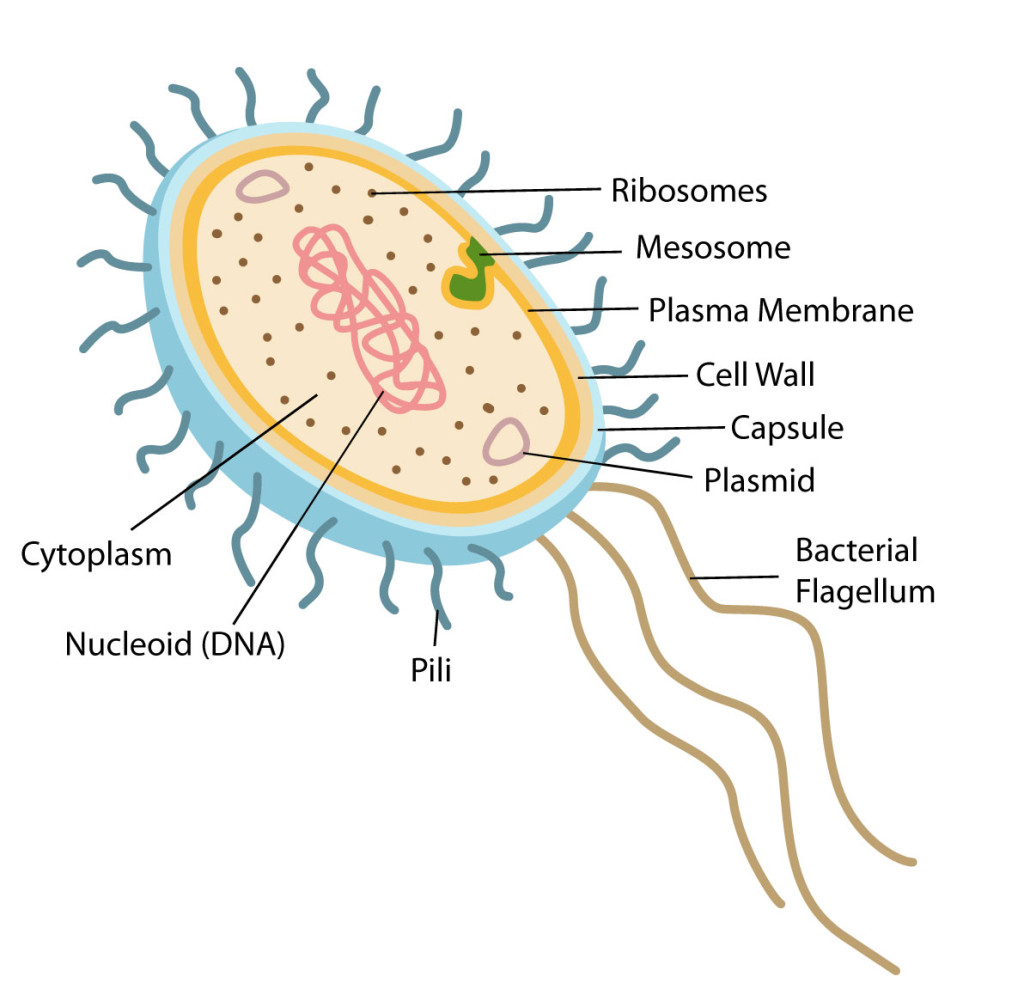
Prokaryotic cells fall into a size range of about 1–5µm and hence can be observed clearly by microscopes. However, some prokaryotic cells may be larger than this.
原核细胞包含外部和内部结构。胶囊,鞭毛,轴向细丝,FIMBRIA和PILI存在于CellWall外部,而细菌细胞的内部含有细胞质。
Flagella –鞭毛是鞭子,如由蛋白质制成的结构,并为细胞提供动力。原核细胞可能是
- 单调 - 有一个鞭毛的细胞。
- Lophotrichus - 具有丛鞭子丛的细胞,在细胞的一端。
- amphitrichous - 细胞在细胞的两端具有鞭毛。
- 覆身 - 具有覆盖表面上整个细胞的鞭毛的细胞。
Fimbriae和Pili -Fimbriae are proteinaceous, sticky, projected structure used by cells to attach to each other and to objects around them, while pili are tubules that are used to transfer DNAfrom one cell to another cell.
Capsule Depending on the type of bacterium, there may be an exterior surrounding layer.such as a capsule or slime layer, made of glyocalyx
Cellwall –The prokaryotic cell’s cell wall is present outside the plasma membrane. It provides rigidity to the cell shape and structure and protects the cell from its environment. Bacterial cell wall is primarily composed of peptidoglycan and on the basis of cell wall composition the bacteria classified into gram-positive and gram negative organisms.
细胞质膜 -细胞质膜是在环境和细胞内部结构之间提供选择性屏障的膜。
细胞质
细胞质是厚厚的。在原核细胞内部存在水性,半透明,和弹性霉素。它约为80%的水,主要含有蛋白质(酶),碳水化合物,脂质,无机离子和许多低分子量化合物。无机离子在细胞质中的浓度高于大多数培养基。
Nucleoid/Genetic material –The cytoplasm also contains a region called the nucleoid, which is where the DNA of the cell is located. The prokaryotic cell consists of a chromosome that isn’t contained within a nuclear membrane or envelope. The nucleoid or bacterial chromosome comprises a closed circle of double stranded DNA, many times the length of the cell and is highly folded and compacted.
Ribosomes –核糖体是核细胞后原理结构。它们由蛋白质和RNA的复合物组成,并且是细胞中蛋白质合成的部位。原核核糖体是70s,由子单元50s和30s组成,30s代表Sydberg系数,这是它们的尺寸和形状的函数,并通过它们在离心机中的沉降速率确定)
Inclusion bodies –在某些细菌的细胞质中发现了许多称为包容体的粒状结构。这些含有有机化合物,例如淀粉,糖原或脂质,并作为食物储备。还发现一些含硫和多磷酸盐体,并且称为卷或异构颗粒。
Endospore –A number of gram-positive bacteria can form a special resistant, dormant structure called an endospore. Endospores develop within vegetative bacterial cells and are extraordinarily resistant to environmental stresses such as heat,ultraviolet radiation,gamma radiation, chemical disinfectants, and desiccation.
原核细胞远小于真核细胞。原核和真核细胞之间的主要差异如下所述:
| 特征 | 原核细胞 | Eukaryotic Cells |
| 细胞壁 | 层中的复杂组合物,通常含有肽聚糖 | Composition is simple, peptidoglycan not found |
| 膜膜 | 没有碳水化合物或甾醇 | Contains carbohydrates and sterols |
| glycalyx. | Present as capsule or slime layer | Present in cells that lack cellwall |
| 细胞器 | 没有。只有一些包含体 | 呃,高尔基体,溶酶体,线粒体,溶酶体 |
| 核 | Not well defined, without any nuclear membrane or nucleoli | 定义明确的核,核膜和核 |
| Chromosome | Single circular chromosome present as nuclear material without histones | 用组蛋白发现多种线性染色体 |
| Ribosomes | 70S | 80年代 |
| Cell division | 二分裂 | 有丝分裂 |
Points to Remember:
- All bacteria are prokaryotes and much simpler structurally than eukaryotes.
- Most bacteria have a cell wall outside the plasma membrane to give them shape and protect them from osmotic lysis.
- 细菌壁是化学复杂的,通常含有肽聚糖或murein。基于细胞壁结构的差异及其对革兰氏染色的响应,细菌通常被归类为克阳性或革兰氏阴性
- The cytoplasmic matrix contains inclusion bodies and ribosomes.
- 原核遗传物质位于称为核的区域中,并且不被膜包围。
- 胶囊,鞭毛和性皮利亚等结构被发现在细胞壁外。
- 一些细菌通过形成肠孢子,耐热,干燥和许多化学物质的休眠结构而存活不利的环境条件。


gyuhpogol.